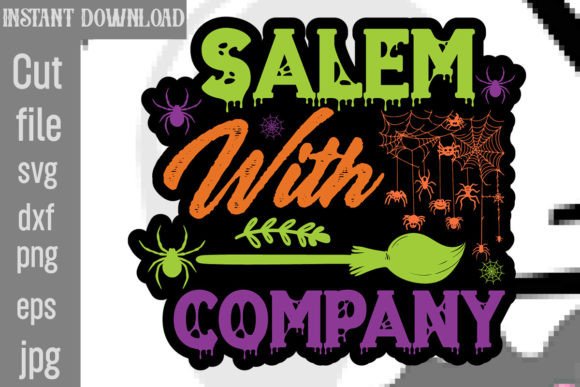
Salem with Company SVG Cut File Graphics and Crafts
When a client approaches me with a request for a brand identity that feels both grounded and distinctly artisanal, I often find myself looking for assets that bridge the gap between modern minimalism and rustic charm. Recently, I evaluated Salem with Company SVG Cut File for a potential project involving a boutique candle line and lifestyle goods retailer. The brief called for packaging materials and social media graphics that felt handcrafted yet professional enough for retail shelves. After reviewing the file structure and visual weight of this asset, I have formed a clear perspective on its suitability for commercial design work.
First Impressions of Visual Mood and Style
The initial reveal of Salem with Company SVG Cut File suggests a design language rooted in heritage and simplicity. The typography and accompanying graphical elements evoke a sense of established trust, reminiscent of old-world apothecary labels or classic general store signage. For a designer, this is a crucial distinction. It does not feel like a generic template; it carries a specific narrative weight. The lines are clean, suggesting precision, while the overall composition hints at a handmade origin. This makes it an ideal candidate for small business branding projects where authenticity is the primary selling point.
In the context of modern design, this asset manages to avoid feeling dated. Instead of leaning too heavily into ornate flourishes that might clutter a layout, it relies on strong structural integrity. This means it can serve as a focal point in packaging design without overwhelming the product information. For a client launching a new line of organic skincare or specialty foods, this visual mood communicates quality and care before the customer even reads the ingredient list.
Performance in Real-World Design Scenarios
One of the most common challenges designers face is finding a versatile graphic design asset that performs well across multiple mediums. Salem with Company SVG Cut File excels here due to its vector nature. When integrated into a brand identity system, the asset holds up remarkably well whether it is scaled down for a tiny product label or blown up for a large format poster.
I tested the concept in several mockup scenarios:
- Packaging Design: On kraft paper labels, the asset provided a striking contrast that enhanced readability. It worked particularly well as a central emblem, framing the brand name effectively.
- Social Media Graphics: For marketing visuals on Instagram and Pinterest, the asset served as a powerful background element. When placed over subtle textures or solid earth tones, it anchored the social media graphics and drew the eye immediately.
- Merchandise: In terms of t-shirt design and tote bags, the clean lines ensured that the print would remain crisp. This is vital for print-on-demand sellers who need designs that translate cleanly to fabric without losing detail.
Furthermore, the inclusion of a transparent PNG at 300 DPI allows for quick placement in Canva templates or Photoshop compositions. This is a significant time-saver for content creators who need to produce digital ads rapidly. However, the true power lies in the vector files, which allow for color adjustments to match specific brand palettes, ensuring brand consistency across all touchpoints.
Strategic Placement and Creative Applications
To get the most out of this asset, strategic placement is key. Salem with Company SVG Cut File works best when given breathing room. It thrives in large layout areas such as hero sections of a website or the front panel of a box. As a hero graphic, it establishes the tone of the entire project.
It also serves exceptionally well as a decorative accent in editorial design. Imagine using it as a divider in a blog post about handmade crafts or as a border element in a printable invitation suite. In these roles, it adds texture and interest without competing with the primary text. For Etsy product listings, using this asset in your main thumbnail image can significantly increase click-through rates by signaling a high-quality, curated aesthetic.
However, there are contexts where caution is advised. In crowded layouts or complex backgrounds, the asset may lose its impact. If you are designing for a minimalist branding project that relies on extreme negative space, this asset might introduce too much visual noise. Similarly, in professional corporate materials where a sleek, sterile look is required, the rustic charm of this file might clash with the desired tone of authority and neutrality. Always consider the visual hierarchy; if the asset competes with critical call-to-action buttons or essential data, it should be scaled back or removed.
Technical Inspection and Designer Notes
Before integrating any design bundle into a client project, a rigorous technical check is non-negotiable. The download provides a comprehensive set of formats: an SVG for Cricut users, a DXF for Silhouette enthusiasts, an EPS vector file, and a high-resolution PNG. This variety is excellent for flexibility.
Here are my practical notes for designers evaluating this asset:
- Test in Black and White: Convert the asset to grayscale to ensure the design has strong form and legibility independent of color. This tests the core strength of the SVG design.
- Check Contrast: Preview the asset on both light and dark backgrounds. Ensure that the stroke weights are sufficient to maintain visibility against varying backdrop colors.
- Inspect Transparency: While the PNG includes a transparent background, always zoom in to check for jagged edges or halo artifacts around the curves. At 300 DPI, it should be sharp, but verification is essential for high-end product mockups.
- Vector Editability: Open the EPS or SVG file in Illustrator. Check if the paths are clean and editable. This allows you to adjust kerning or modify shapes to better fit a specific logo design constraint.
- Font Comparison: Compare the style of the asset with serif, sans-serif, script, handwritten, and display font styles used in your project. Determine if the asset complements or clashes with your chosen typography. Often, pairing this asset with a clean sans-serif body text creates a balanced creative design.
Final Verdict for Commercial Use
Salem with Company SVG Cut File is more than just a clipart or illustration; it is a cohesive sublimation design and sticker design element that brings character to a project. Its ability to convey a story of craftsmanship makes it invaluable for handmade business owners and content creators looking to elevate their visual presence.
For designers, the value lies in its versatility and professional finish. It supports a wide range of applications, from web design accents to physical printable wall art. However, the ultimate decision rests on the specific needs of the client. If the project demands a rustic, authentic, and visually engaging aesthetic, this asset is a strong contender. Just remember to confirm the commercial license terms before using it for a client or business project, ensuring that your usage rights align with the scope of the deliverables.
In summary, this digital product offers a robust foundation for creating polished, emotionally resonant designs. By treating it with the same scrutiny as any custom-created vector, designers can leverage Salem with Company SVG Cut File to deliver exceptional results that satisfy both creative aspirations and commercial goals.