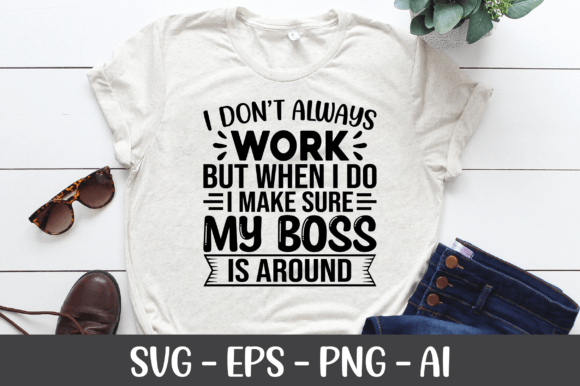
I Don t Always Work but when I Do I Make
As a designer who spends half my life staring at stitch charts and the other half troubleshooting tension issues on a hoop, I approach every new embroidery file with a mix of skepticism and hope. We have all seen designs that look perfect in vector software but turn into a tangled mess once the needle starts moving. Today, I am putting I Don t Always Work but when I Do I Make through its paces. This isn't just about whether it looks cute; it is about whether it works as a viable asset for your craft business, your Etsy shop, or your next personalized gift project.
The product falls squarely into the Crafts and Graphics categories, offering a digital download that includes AI, SVG, EPS, and PES files. While the format variety is excellent for versatility, my primary concern as an embroiderer is how this text-based design translates to thread. The phrase itself carries a specific mood—witty, relatable, and slightly rebellious. It speaks directly to the maker community, making it a potentially high-converting item for those selling custom apparel or handmade gifts. But does the visual execution hold up under scrutiny?
First Impressions and Visual Personality
When you first load the I Don t Always Work but when I Do I Make design into your digitizing software, the layout strikes me as balanced. The typography appears bold enough to stand out, which is crucial for text-heavy embroidery. In my experience, many "funny quote" designs fail because the font choice becomes illegible after stitching, especially if the stitch density is too low or the letter spacing is off. Here, the design seems to prioritize readability, ensuring that the punchline lands clearly on the finished product.
The visual personality is casual and modern. It feels less like a formal monogram and more like a statement piece. This makes it ideal for items where you want the wearer or owner to feel a sense of humor and identity. Whether it ends up on a slouchy beanie, a kitchen apron, or a tote bag, the design brings a level of personality that generic floral patterns simply cannot match. For an Etsy seller, this kind of relatable content often drives engagement because customers see themselves in the message.
Real-World Application: From Screen to Stitch
Let’s talk about practical use. Imagine you are preparing a batch of custom embroidered tote bags for a local craft fair. You need something that appeals to a broad audience but still feels unique. I Don t Always Work but when I Do I Make fits this niche perfectly. The design is versatile enough to work on canvas totes, denim jackets, and even heavy cotton sweatshirts. However, placement matters. On a large surface like a tote bag front, the text can breathe. On smaller items like baby onesies or cap fronts, you will need to scale it carefully to avoid overcrowding.
I also tested the concept mentally for holiday gifts. This design has strong potential as a humorous stocking stuffer or a gift for a fellow entrepreneur. The "maker" theme resonates deeply with hobbyists and small business owners. If you are creating a line of handmade products, pairing this design with neutral thread colors on dark fabric can create a sophisticated yet playful contrast. It elevates the perceived value of the handmade product, making it feel like a premium personalized gift rather than a mass-produced novelty item.
Where to Use It (And Where to Pause)
While this design is robust, no embroidery file is universally flawless. There are specific scenarios where I Don t Always Work but when I Do I Make requires careful consideration:
- Small Hoop Sizes: If you are working on tiny accessories, check the bounding box. Tight spaces can lead to overlapping stitches, causing the text to blur. Always test in your actual hoop size before committing to a full production run.
- Textured and Stretchy Fabrics: Knits, fleece, and heavily textured fabrics can distort text. Without proper stabilizer support, the letters may pucker or shift. This design relies on clean lines, so it performs best on stable wovens like cotton, linen, or denim.
- Dense Stitch Areas: If the design uses heavy fill stitches for the background or thick outlines, it may become stiff. For apparel that needs to drape well, lighter stitch densities are preferable. Check the stitch type—is it mostly satin stitch for outlines, or is there significant fill? Satin stitch is great for crisp edges, but too much of it can make the fabric rigid.
- Curved Surfaces: Applying this to a curved surface like a baseball cap requires advanced hooping techniques. The text may warp if not stabilized correctly along the curve.
Technical Notes for the Serious Designer
Before you start selling these as commercial embroidery items, there are technical steps you must take. First, inspect the small details. Even in a text-based design, serifs and corners can get lost if the digitization is sloppy. Zoom in on the vector preview. If the curves look jagged, they will stitch poorly.
Next, consider your thread colors. The design’s impact changes dramatically based on contrast. A white text design on black fabric reads differently than gold text on navy blue. I recommend creating printable mockups in both light and dark backgrounds to see how the embroidery file holds up visually. This helps you decide which color combinations will attract the most buyers on platforms like Etsy.
Also, verify the licensing terms. Since this is a digital download containing multiple formats (AI, SVG, EPS, PES), ensure you understand what you are allowed to do. Can you sell the finished physical goods? Can you resell the digital files? As a professional, protecting your intellectual property and respecting the creator’s rights is non-negotiable. If the license is unclear, contact the seller before listing any Etsy seller products.
Final Verdict: Is It Worth Adding to Your Arsenal?
I Don t Always Work but when I Do I Make is a solid addition for designers looking to tap into the humor and relatability market. It offers good structural integrity for text, a clear visual message, and versatility across various craft business items. It is particularly strong for custom apparel, tote bag design, and holiday embroidery projects.
However, success depends on your execution. Proper stabilizer selection, correct hoop size confirmation, and thoughtful thread color choices will determine whether the final product looks professional or amateurish. Test it on scrap fabric first. Check the stitch density. And remember, while the design provides the template, your skill as an embroiderer provides the value.
If you are a small shop owner or a creative entrepreneur looking to expand your catalog with items that resonate emotionally with customers, this design delivers. It is witty, stylish, and ready to be stitched into something tangible. Just ensure you respect the technical limitations of the medium, and you will likely find that this design becomes a staple in your production workflow.